


April 25, 2026 Field Notes
HARRIS’S HAWK
Looking for a vacation destination where you can add Harris’s hawk to your birding-life list?
You can observe a family of resident Harris’s hawks at Elkhorn Ranch southwest of Tucson. The ranch is tucked into the foothills of the Baboquivari Mountains, one of southern Arizona’s unique Sky Island ecosystems, considered a hotspot for birding.
The Harris’s hawk perch in a tall dead tree that is visible from the ranch road. I (Mary) have seen as many as six Harris’s hawks in the tree! This view is close enough to study their behavior with the naked eye or see the birds more intimately through the lens of a camera or binoculars. The Harris’s hawks’ dark profiles contrast with the blue sky ~ a prime target for bird photography or nature sketching!
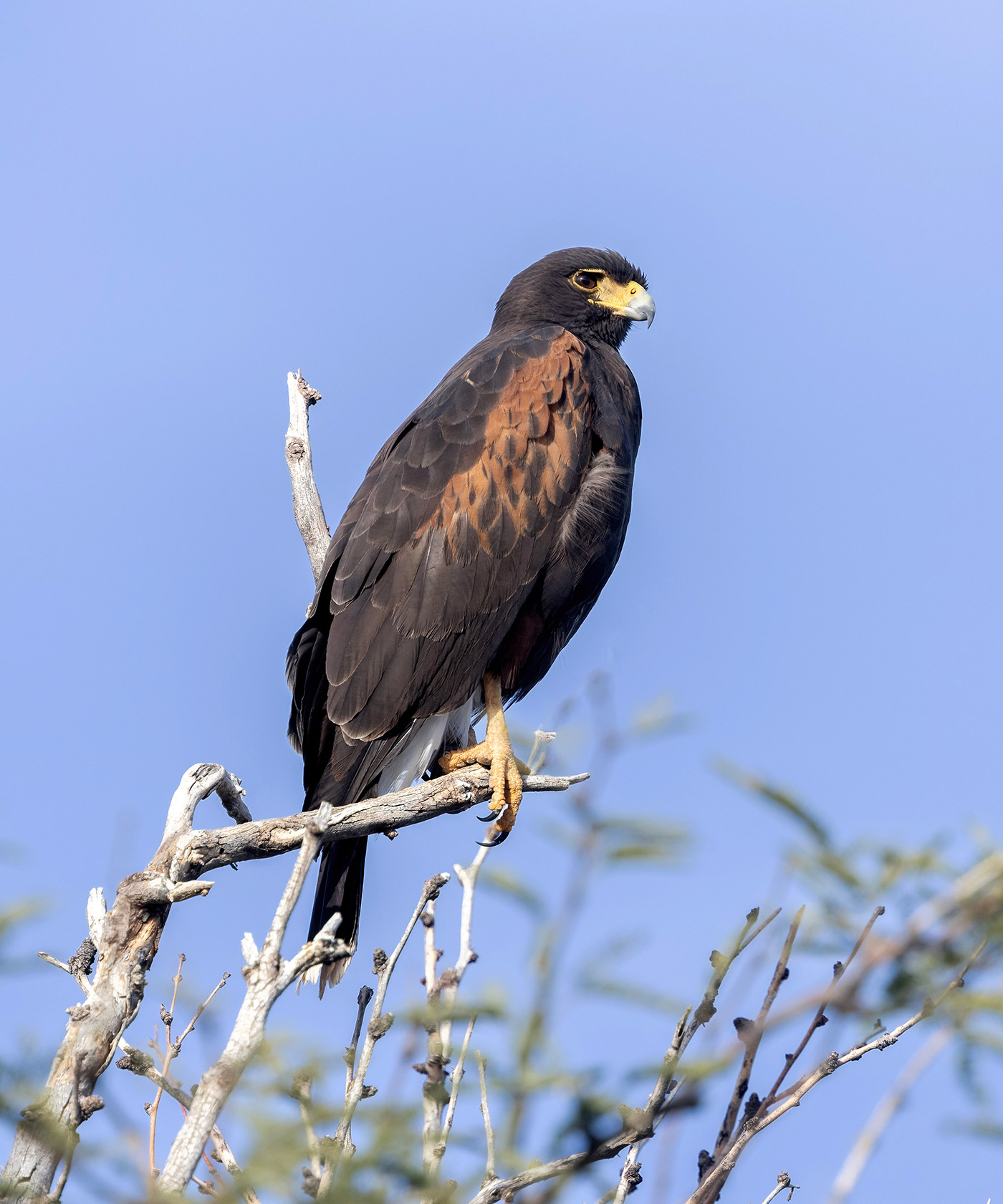
Photo by Steve Kessel
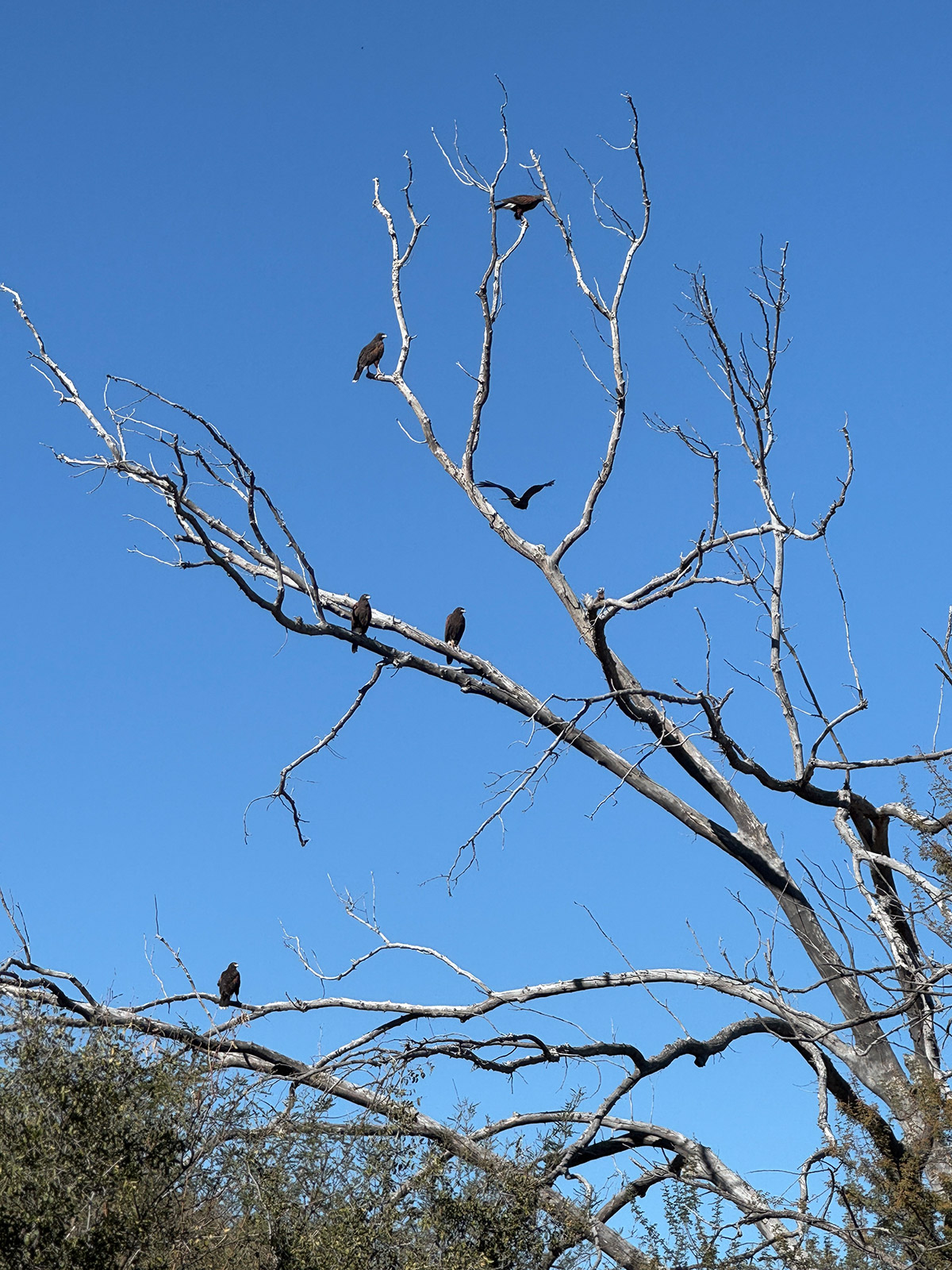
A family group of Harris's hawks perches in this dead cottonwood tree
Why did the Harris’s hawk family choose this place to live?
I sat down with Elkhorn guest and Tucson based bird photographer Steve Kessel to explore this question. He explained that they are a bird species that originated in South America and Mexico, that appeared in southern Arizona, New Mexico and Texas in the late 19th century. The popular theory is that they moved into these areas as ranchers developed water systems for their livestock.
Harris’s hawks are not adapted to arid desert environments, as they require a constant supply of water. The trees where the hawks roost are very near the ranch’s Lower Corral where there is water available year-round.
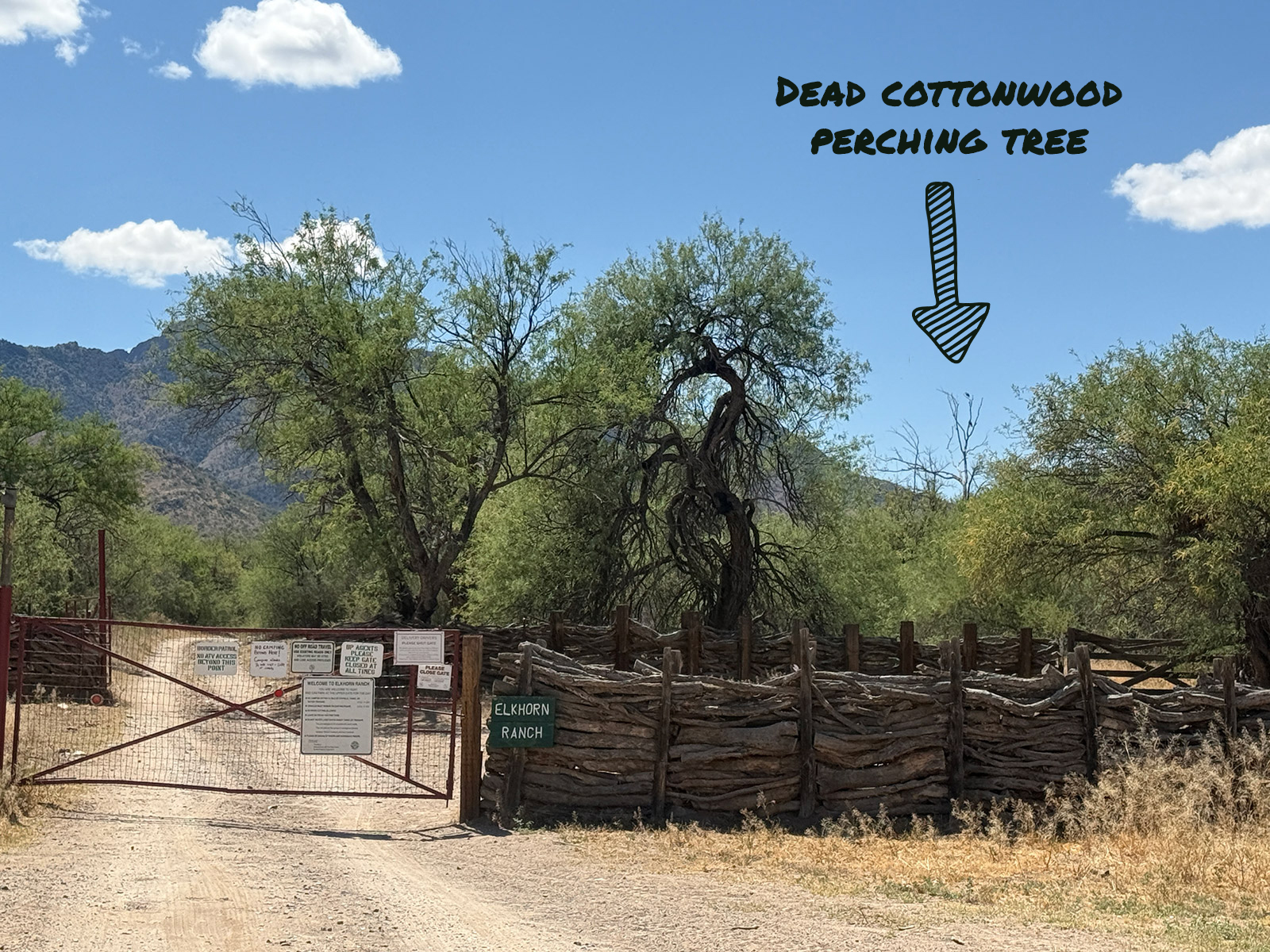
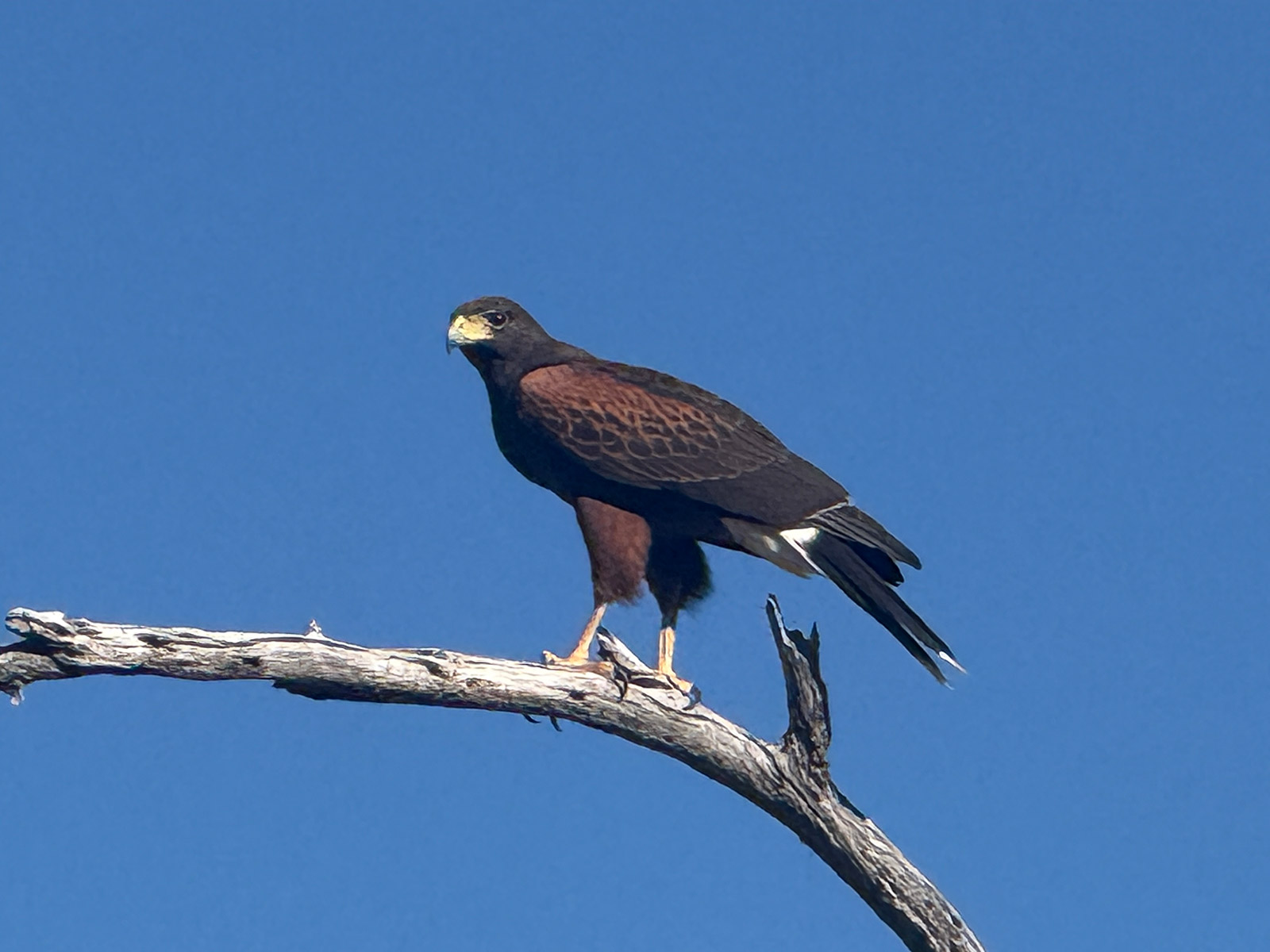
Elkhorn Ranch corrals include water for livestock and resident Harris’s hawks!
Why are there so many harris’s hawks together in one tree?
Steve explained that they live in a family group led by a dominant female bird and they hunt together. One of their special traits is their ability to walk on the ground. Steve described a hunting style called perch and pounce where the birds perch in low trees to encircle the prey and then simultaneously pounce to finish the hunt from the ground.
Steve is passionate about nature and photography and says, “If it has DNA I’ll photograph it!”
He first experienced the Sonoran Desert during spring wildflower season in 1989 when he visited the Tohono O’odham Nation during a work trip. He and his wife loved horseback riding and began annual visits to Elkhorn in 1991. Their love for the Tucson area evolved to the point where they retired to Tucson in 2011. Steve has considered himself a photographer since his teens, but the Sonoran Desert inspired him to become a nature photographer. The birds in their Tucson backyard, walking in Sabino Canyon of the Santa Catalina Mountains, and many years at Elkhorn launched his interest. His natural history curiosity merged with his lifelong love of photography and he found his retirement passion ~ nature photography ~ which he shares via his blog Sonoran Images.
Steve Kessel’s top 3 sources for southern Arizona birding information:
• Tucson Bird Alliance formerly Tucson Audubon Society
• Sibley Birds West: Field Guide to Birds of Western North America
• Cornell Lab of Ornithology
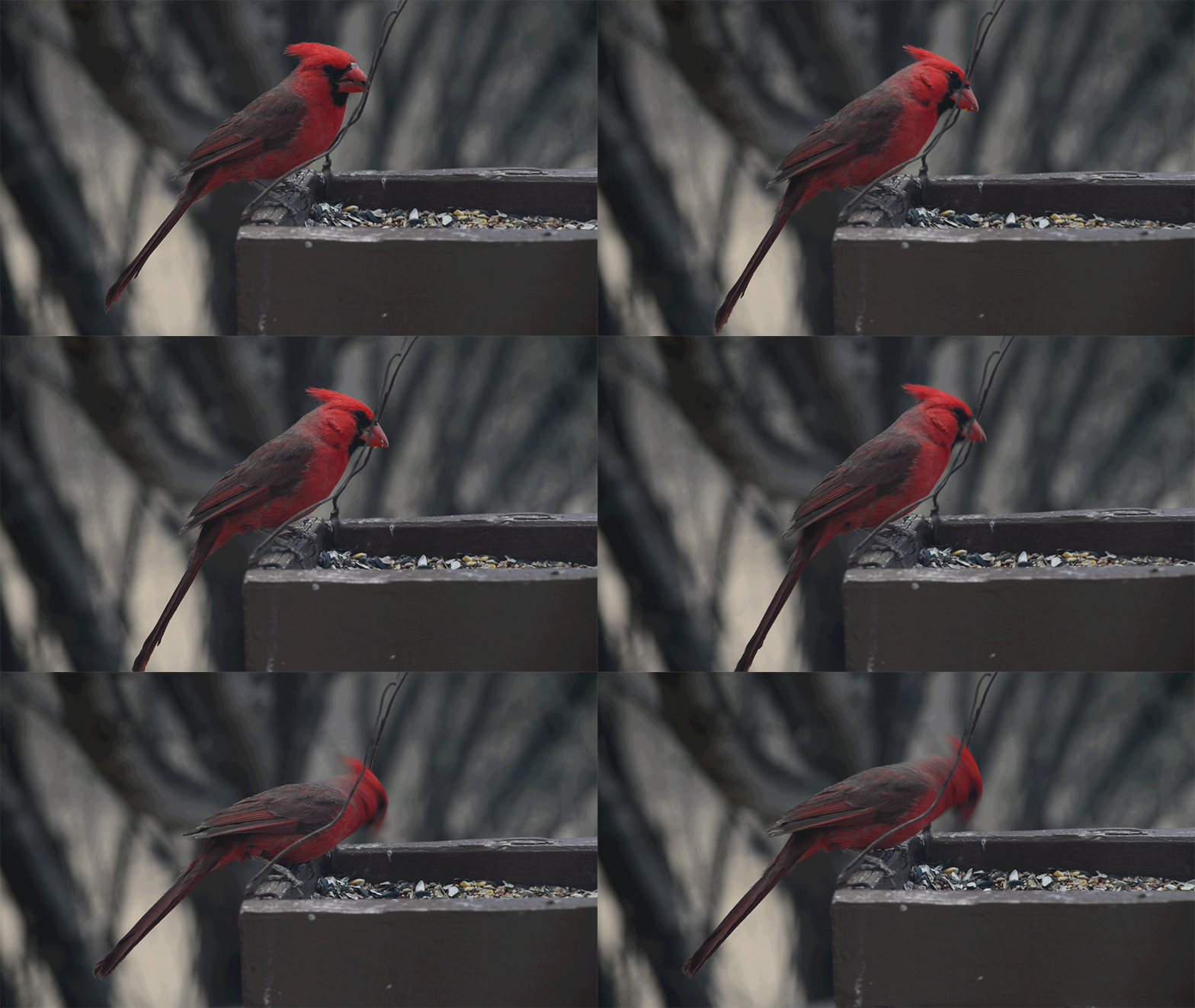
Birds frequent the BIRD WATERING SPOTS AROUND THE CABINS And the ranch provides as much birdseed as you care to feed. You may find yourself becoming a birder!
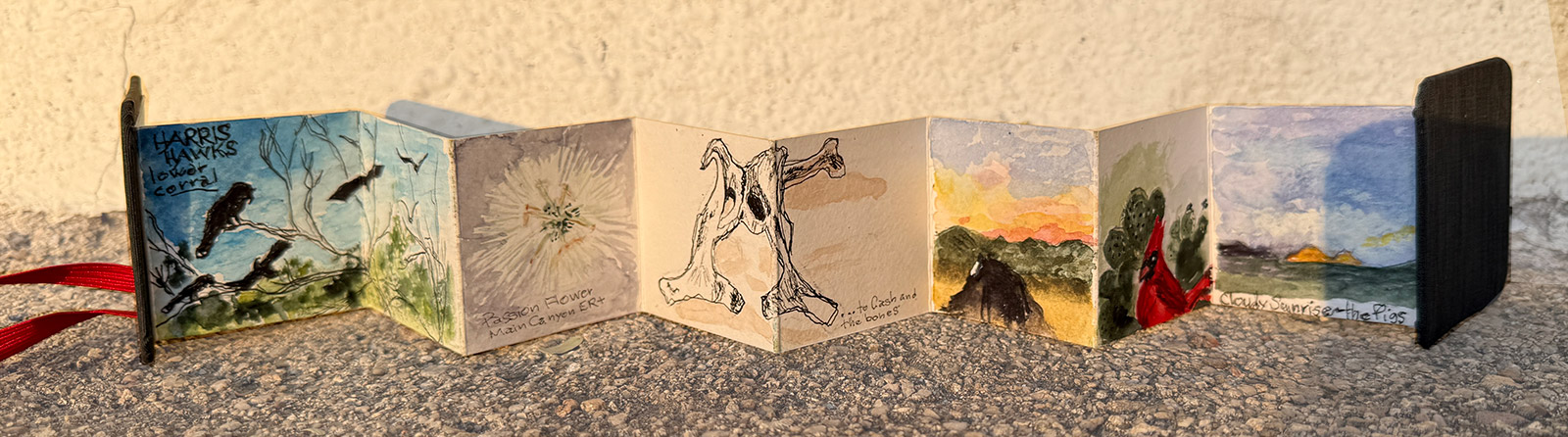
Watercolor sketches by Elkhorn Ranch guest Nancy Taylor
NEWS +
STORIES
NEWS +
STORIES
Stay in the loop! Subscribe and receive the latest Elkhorn news in your inbox. Rest assured we won’t share your e-mail address with anyone.
WORKSHOPS + EVENTS
OLD-TIME MUSIC
JANUARY 3 – 10, 2027
FOLK MUSIC
JANUARY 10 – 17, 2027
DIGITAL PHOTOGRAPHY
JANUARY 17 – 24, 2027
DESERT LANDSCAPE ART
JANUARY 24 – 31, 2027
COMING INTO BALANCE: EXPLORING RELATIONSHIPS THROUGH HORSEMANSHIP
JANUARY 24 – 31, 2027
JANUARY 31 – FEBRUARY 7, 2027
HUMAN HISTORY OF THE ALTAR VALLEY
FEBRUARY 7 – 14, 2027
KATE AITCHISON – ARTIST IN RESIDENCE
DATES TO BE CONFIRMED

